


In the modern digital landscape, anonymity is a double-edged sword. While businesses need privacy to conduct market research and competitive analysis, websites are increasingly deploying sophisticated defense mechanisms to block automated traffic. At the heart of this battle lies a single, critical metric: the IP Quality Score.
If you have ever faced unexplained account suspensions on Amazon, encountered endless CAPTCHA loops while scraping Google, or had your ad verification attempts blocked, you have likely fallen victim to a poor IP score.
This in-depth analysis will decode the technicalities of IP reputation, explain the financial impact of low-quality proxies, and demonstrate how transitioning to premium residential infrastructure—like that offered by iphalo—can safeguard your business continuity.
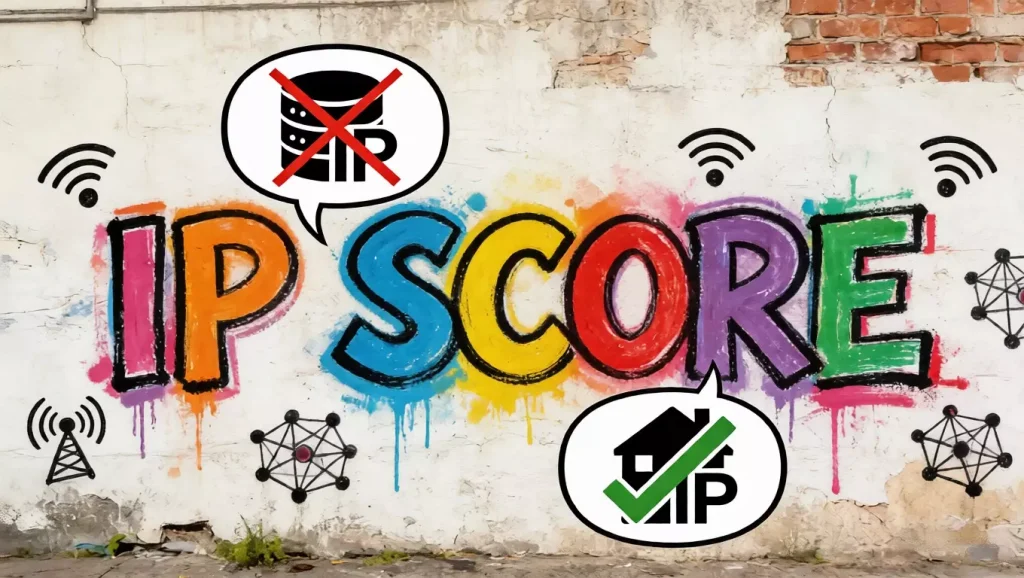
Part 1: What Exactly is IP Quality Score?
IP Quality Score (often referred to as Fraud Score or IP Reputation) is a numerical value assigned to an IP address that indicates its risk level. Just as a bank checks your credit score before issuing a loan, a website checks an IP’s quality score before allowing it access to its server.
How is the Score Calculated?
The score isn’t random. It is aggregated from massive databases maintained by security firms like MaxMind, IPQS, and Scamalytics. These systems analyze an IP based on four primary pillars:
- Recent Abuse History: Has this IP been involved in DDoS attacks, spam email campaigns, or credential stuffing attacks in the last 7 to 30 days? A “Yes” here results in an immediate high-risk flag.
- Connection Type (The Critical Factor):
- Data Center IPs: Hosted on cloud servers (e.g., AWS, DigitalOcean). Websites know these are rarely used by humans, so they are treated with suspicion.
- Residential IPs: Assigned by ISPs (e.g., AT&T, Verizon) to real homes. These are highly trusted.
- Open Port Scanning: Security providers actively scan the internet for open ports. If an IP has ports open that are commonly used for proxying, it signals that the IP is being used as a gateway, lowering its trust score.
- Botnet Association: If an IP is part of a known botnet (a network of infected devices), its score drops to zero immediately.
Part 2: The Business Impact of a “Bad” IP
Many businesses assume that “an IP is just an IP.” They opt for the cheapest proxy solutions available, believing they are saving money. In reality, the hidden costs of using low-reputation IPs can cripple your operations.
1. E-commerce and Account Management
For sellers on platforms like eBay, Amazon, Etsy, or Shopify, IP reputation is everything.
- The Risk: These platforms use “Linkage” detection. If you log into a seller account using an IP that has a high fraud score (or was previously used by a banned seller), your account will be “linked” to that bad history.
- The Consequence: Instant account suspension. Reinstating a suspended Amazon seller account is a nightmare that can cost thousands of dollars in lost revenue and legal fees.
2. High-Volume Web Scraping
Data is the lifeblood of modern business. Whether you are scraping pricing data, travel fares, or SEO rankings, efficiency matters.
- The Issue: When you use low-score IPs, target websites (like LinkedIn or Instagram) will feed you misleading data or “poisoned” results to confuse your scrapers.
- The Cost: You might be making business decisions based on false data, or your engineering team might spend weeks trying to bypass blocks that are simply caused by bad IPs.
3. Ad Verification and Brand Protection
To protect your brand, you need to see how your ads appear in different countries. Ad networks will block low-quality VPNs, preventing you from verifying if your localized ad is running correctly.
To ensure your tools are not working blindly, it is crucial to proactively check your IP reputation using trusted third-party databases before launching any major campaign.
Part 3: Residential vs. Data Center IPs – The Core Difference
To improve your IP Quality Score, you must understand the infrastructure you are using.
Data Center Proxies:
- Pros: Cheap, fast.
- Cons: Extremely easy to detect. Most major websites have already blacklisted entire subnets of data center IPs.
- Verdict: Good for low-security targets, bad for business-critical operations.
Residential Proxies:
- Pros: High trust score. They appear as genuine user traffic. Hard to block without blocking real customers.
- Cons: Slightly more expensive.
- Verdict: Essential for scraping, account management, and accessing strict websites.
This is where premium residential proxy services like iphalo shine. Unlike providers that mix dirty IPs into their pools, iphalo focuses exclusively on high-purity residential IPs. By sourcing IPs from legitimate ISP networks, we ensure that your traffic is indistinguishable from a regular user browsing from their living room.
Part 4: How to Maintain a Healthy IP Reputation
Even with the best resources, poor usage habits can degrade your IP score. Here are three best practices to keep your score green.
1. Implement Intelligent Rotation
Never use a single IP address for high-volume tasks.
- For Scraping: Rotate your IP after every request or every few minutes.
- For Accounts: Use “Sticky Sessions.” This keeps the IP consistent for a set period (e.g., 30 minutes) while you are logged in, mimicking a human session. iphalo provides flexible rotation settings to handle both scenarios.
2. Manage Your Digital Fingerprint
Your IP is only half the story. Websites also look at your “Browser Fingerprint” (User-Agent, Canvas, WebGL).
- Tip: Ensure your browser’s timezone, language, and DNS settings match the location of your IP. If your IP is in New York but your browser timezone is “Asia/Shanghai,” your fraud score will spike.
3. Avoid “Free” and Public Proxies
We cannot stress this enough: Free proxies are dangerous. They are often set up by hackers to steal data (Man-in-the-Middle attacks) or are already blacklisted by 99% of the internet. Using them is a guarantee of a terrible IP Quality Score.
Part 5: Frequently Asked Questions (FAQ)
Q: Can I fix a bad IP Quality Score on my own?
A: Generally, no. If an IP is blacklisted, it can take months to “cool down.” The only immediate solution is to switch to a new, clean IP provided by a premium service.
Q: How do I check my current IPscore?
A: You can use public databases like IPQS or Scamalytics to run a quick check. If your score is above 75 (High Risk), you need to change your proxy immediately.
Q: Is iphalo suitable for scraping Google or LinkedIn?
A: Yes. Because iphalo uses real residential IPs, it can bypass the strict anti-bot measures deployed by major tech platforms, ensuring high success rates for data collection.
Conclusion: Quality is an Investment, Not an Expense
In the high-stakes world of digital business, your IP infrastructure is the foundation of your success. Relying on low-quality IPs is like building a house on sand—eventually, the blocks, bans, and inaccurate data will cause the structure to collapse.
Don’t let a low IP Quality Score dictate your growth limits. By choosing a reputable, high-performance provider like iphalo, you are investing in stability, accuracy, and peace of mind.
Ready to upgrade your operations? Access a network of pure, high-reputation residential IPs today. Register for your iphalo account here and experience the difference that quality infrastructure makes for your business.

-1.webp)