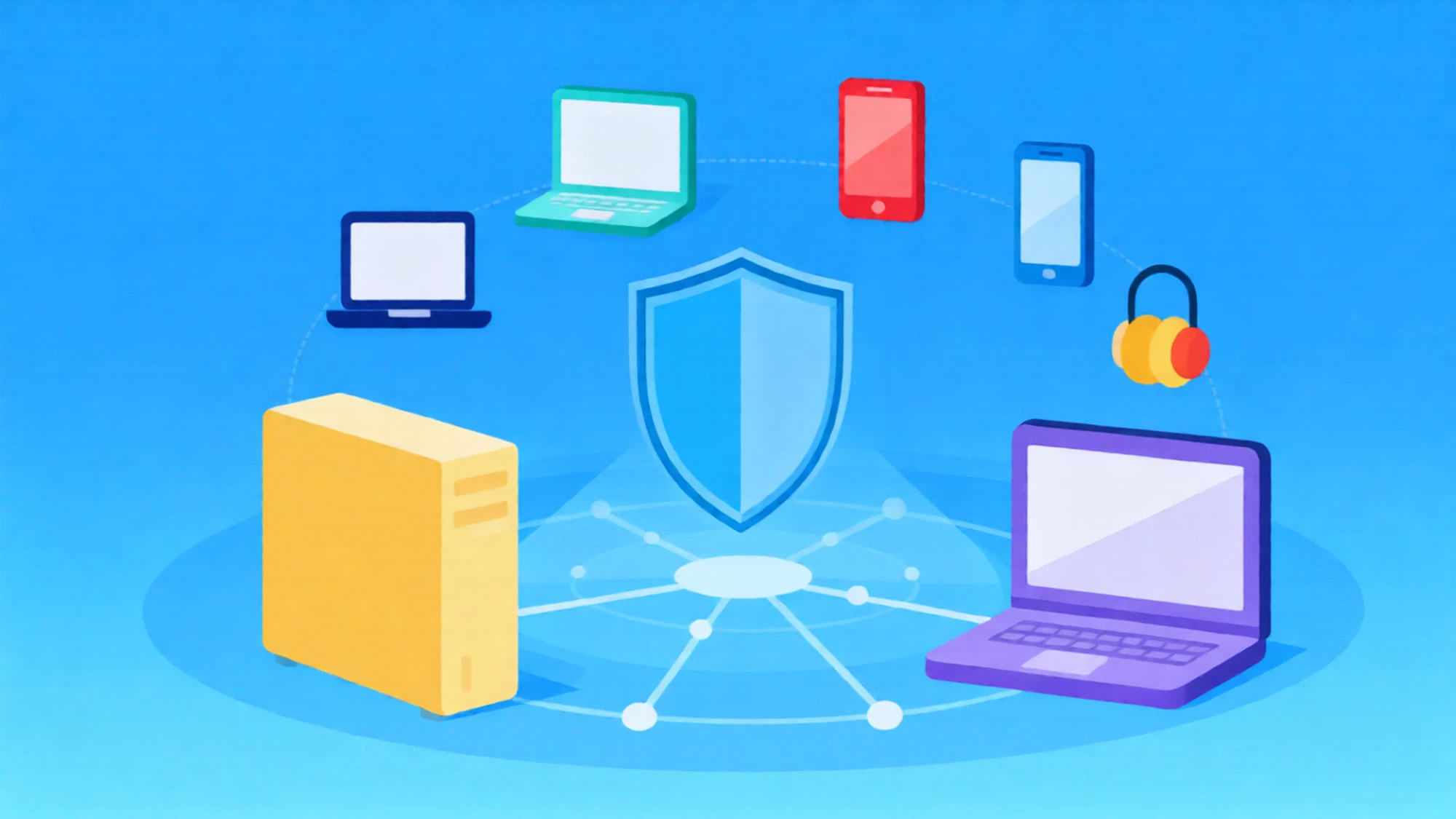


As Gemini 3 further expands the technological boundaries of Artificial Intelligence, we are witnessing a continuous evolution in “machine cognition.” However, for business applications aiming to land in the global market, improving model parameters is just the first step. The real challenge lies in providing this super-brain with a continuous, authentic, and effective stream of global market data.
Whether building a cross-border product selection model or developing an automated Customer Service Agent, the quality and stability of data input directly determine the AI’s output value. In this ecosystem, residential proxy technology is no longer just a connectivity tool; it is the “digital nervous system” connecting AI models to the real-world commercial environment.

Data Hunger in the RAG Era: When AI Meets Network Risk Control
Modern enterprise AI applications widely adopt the RAG (Retrieval-Augmented Generation) architecture: AI must first scrape the latest public data from the internet before processing it. However, foreign trade e-commerce platforms and global social media sites have strict risk control mechanisms for high-frequency automated access.
- Eliminating AI’s “Data Blind Spots”
When your AI program attempts to batch-retrieve public market quotes or industry trends, a single server request is often identified as “abnormal traffic” and blocked. This leads to AI hallucinations or analytical bias due to a lack of real-time data input.
Introducing resources with a clean ip is the key to solving this problem. By using compliant ISP network resources, AI data collection requests can mask themselves as normal business visitors. This ensures that the price and inventory data obtained is real and real-time, preventing common issues like error 1015 or seeing the message “your ip has been temporarily blocked.”
- Matching AI’s High-Concurrency Capabilities
Advanced models like Gemini 3 possess powerful parallel computing capabilities, capable of handling massive tasks simultaneously. However, on the data collection side, if there is a lack of corresponding network support, computing power is wasted.
Building a rotating network pool using a dynamic ip allows you to assign a unique IP address (or a random ip address) for every single data retrieval request made by the AI. This is like equipping your AI with thousands of “digital collectors” distributed globally. It effectively solves API rate limits triggered by high-frequency requests—often seen as a proxy error 402 on some platforms—ensuring the data flows smoothly like an assembly line.
Real-World Scenarios: Application of Proxy IPs in AI Business
Moving beyond dry technical principles, let’s look at how the network layer supports the workflow in the intelligent upgrade of cross-border business.
Scenario 1: Multilingual Smart CS & Brand Management
Many brands are leveraging multimodal AI models to manage global social media accounts. To ensure account asset security and avoid risk verification caused by login environment jumps (such as the dreaded “facebook session expired” loop), a static ip (ISP Proxy) has become a standard configuration.
Acting as one of the best proxy sites of operation, it provides a long-term, stable network environment for every AI-managed account. It acts like a digital “fixed desk,” which is crucial for maintaining brand image and long-term account authority. This is essential for operating Social Media Proxies effectively without triggering security flags.
Scenario 2: Automated Analysis of Multimedia Assets
With the maturity of visual models, automatically analyzing global trend assets (images/short videos) is possible. This requires a network with extremely high bandwidth and stability.
Using an enterprise-grade network proxy solution ensures that AI does not experience transmission interruptions or timeouts when batch-pulling high-definition visual assets. Through precise regional targeting (e.g., using a united kingdom proxy or US node), AI can accurately acquire localized trend elements from specific target markets, providing precise references for product design.
Scenario 3: Global Supply Chain Data Synchronization
In the intelligent upgrade of supply chain management, multinational enterprises face the challenge of synchronizing overseas warehouse inventory data to AI analysis systems in real time.
The Solution: By deploying IPHALO’s residential ip, enterprises can establish secure, stable connection channels for branches around the world. This high-trust fixed network identity effectively avoids security risk controls of internal enterprise systems (such as ERP) triggered by jumping IP addresses. It ensures that logistics and inventory data are seamlessly transmitted to the AI model for predictive analysis, guaranteeing the efficient operation of the global supply chain.
Developer FAQ: Building the Infrastructure
When building a data collection system based on new-generation AI, the following network configuration questions are most common:
- Q: Should I choose an IPv4 proxy or IPv6 for AI data collection?
- A: This depends on the target site’s support. Currently, mainstream platforms widely support IPv6. Using an IPv6 proxy often provides a more modern network experience and less congestion, suitable for large-scale data throughput. However, a classic ipv4 proxy remains the most compatible standard.
- Q: Why does my crawler often receive CAPTCHAs?
- A: This usually means the reputation of the current IP is low. It is recommended to perform an ip address lookup regularly to check the health of the IP and remove polluted nodes to ensure the pool remains a clean ip source.
- Q: How do I reduce the risk of identification at the code level?
- A: Besides configuring a static ip or dynamic rotation strategy, you need to perfect the fingerprint simulation in Request Headers. Ensure User-Agent, Cookies, and other parameters match real browser behavior. Learning how to use a proxy server correctly in your code (e.g., setting up a socks5 configurator) is vital for success.
- Q: What is a residential proxy’s main advantage over a datacenter proxy?
- A: What is a residential proxy? It is an IP assigned by a real ISP to a homeowner. Its main advantage is high anonymity and legitimate appearance, often bypassing the isp whitelist checks that block datacenter IPs.
Conclusion: Building Robust Infrastructure for Intelligent Business
Gemini 3 represents the height of data processing, while IPHALO is dedicated to expanding the breadth of data acquisition.
In the journey of enterprise intelligence, the stability of network infrastructure is often one of the most overlooked aspects, yet it is the “short stave” that determines the bucket’s capacity. As a professional global data infrastructure provider, IPHALO offers enterprise-grade residential proxy ip solutions that perfectly adapt to the rigorous requirements of the AI era: high concurrency, high stability, and global coverage.
Whether you need a dynamic ip to feed your models or static resources to secure your internal data links, IPHALO can help you build an unimpeded global business intelligence network.
Note: This content is intended for legitimate business purposes only. Please ensure compliance with all applicable local laws and regulations.