


December 2025 will be remembered as the month Google finally took the leash off. With the release of Gemini 3.0 and the new Deep Research capabilities, we are no longer just “chatting” with AI. We are assigning it jobs.
You can now tell Gemini: “Map out the entire supply chain of coffee in Vietnam for 2026, check 500 news sources, and create a report.” And amazingly, it tries to do it. It spins up an Agent, starts browsing the web, and processes data at lightning speed.
But for many developers and power users, this excitement turns to frustration in about 30 seconds. The script crashes. The API returns Error 429 (Too Many Requests). Or worse, the websites your Agent is trying to visit simply block the connection.
Why is the most powerful AI in the world struggling to browse the web? The answer isn’t in the code. It’s in your Network Footprint.
The “Agentic” Shift: Why This Update is Different
To understand the crash, you have to understand the engine. Google’s announcement of Gemini 3 Flash changed the game. Unlike the old models (which just predicted text), the new Flash model is designed for High-Frequency Action.
The Difference:
- Old Gemini (Chat): You ask a question -> 1 Request -> AI answers.
- New Gemini (Agent): You give a goal -> 500 Requests -> AI browses, clicks, reads, compares -> AI answers.
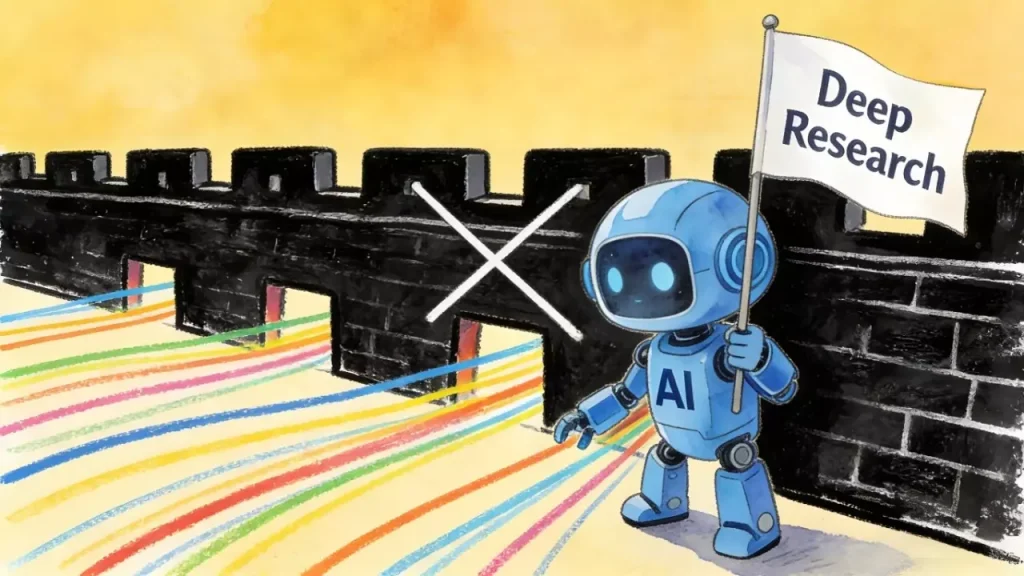
This “Deep Research” behavior behaves exactly like a Web Scraper. When you launch a Deep Research task, your IP address suddenly starts pinging dozens of servers per second. To the outside world, you don’t look like a human reading a blog; you look like a DDoS attack.
Why Your “Deep Research” is Failing
There are two walls you are hitting. One is built by Google, and the other is built by the internet.
- The Google API Throttle
Gemini 3 Flash is cheap and fast, but Google controls the flow. Because “Agentic” workflows consume massive server resources, Google has tightened the Rate Limits for the new API endpoints. If you are running your Agent on a standard IP address, you share your “Reputation Quota” with everyone else on your network. Once you hit the limit (which happens instantly with Deep Research), Google creates a “Cool Down” period where your API keys stop working.
- The “Target Website” Blockade
This is the bigger problem. Let’s say your Gemini Agent tries to read data from Bloomberg, LinkedIn, and Statista to build your report. These websites have sophisticated anti-bot defenses.
- The Scenario: They see a Data Center IP (from your cloud server or VPN) trying to access 20 pages in 5 seconds.
- The Result: They block your IP immediately. Gemini returns an error saying “Unable to access source,” not because it’s stupid, but because the door was slammed in its face.
The Fix: Fueling Your Agent with Residential IPs
If you want to use Gemini 3.0 for real production workflows—marketing analysis, automated coding, or market research—you cannot run it “naked.”
You need to hide the machine. You need to make your high-speed Agent look like a crowd of slow, normal humans.
The Strategy: Rotating Residential Proxies This is where IPhalo’s residential proxy network becomes the engine for your AI.
How it solves the “Agent” problem:
- Request Distribution: Instead of sending 500 research requests from one IP, IPhalo splits them across 500 different residential IPs.
- Human Camouflage: Target websites (like LinkedIn or News sites) see connections coming from real ISPs (Verizon, AT&T, etc.) in residential homes. They allow the access because it looks organic.
- Unlimited API Scale: By rotating your IP for every API call, you effectively bypass Google’s “Per IP” rate limits. You can run Gemini 3 Flash at full speed, 24/7, without ever hitting a 429 error.
Real-World Use Case: The “Smart” News Aggregator
Let’s look at a developer named Alex. The Goal: Use Gemini 3 Flash to scan 1,000 crypto news sites every hour and summarize market sentiment.
Attempt 1 (Direct Connection):
- Alex runs the script on his laptop.
- Minute 1: Works great.
- Minute 3: Google API throttles him.
- Minute 5: 60% of the news sites block his IP for scraping.
- Result: Failure.
Attempt 2 (With IPhalo):
- Alex routes the Gemini Agent through IPhalo’s residential pool.
- Every single news site sees a different “visitor.”
- The API limits are reset constantly.
- Result: A real-time, autonomous market intelligence bot that never sleeps.
Best Practices for Gemini 3.0 Agents
If you are diving into this new update, keep these rules in mind to protect your accounts:
- Don’t be greedy with speed: Just because Flash can process 1 million tokens a minute doesn’t mean you should. Use “delays” in your script to act more human.
- Match Location: If your Agent is researching UK markets, configure your proxy to use UK Residential IPs. This ensures you get local data and avoid geo-blocks.
- Monitor your Headers: Keep an eye on the API response headers. If you see your “Quota Remaining” dropping red, trigger an IP rotation immediately.
Conclusion
Gemini 3.0 and the December 2025 update are incredible. They have given us the power to automate the web. But power without control is useless.
If your “Deep Research” is constantly returning errors, stop blaming the model. The model is fine; your connection is the bottleneck. To unlock the true potential of autonomous AI agents, you need infrastructure that can handle the traffic. Upgrade to a professional residential network, and let your Agents run free.