

You are running a SERP scraper, checking keyword rankings, or perhaps just conducting intense market research. Suddenly, your script crashes. You open the browser to check the URL, and there it is—not the search results, but a plain text warning:
“We’re sorry… but your computer or network may be sending automated queries. To protect our users, we can’t process your request right now.”
Unlike generic connection errors, this message is specific. It is Google’s direct acknowledgement that it knows you are not a human.
For data scientists and SEO professionals, this is the dreaded “Bot Detection” wall. It means your request pattern—specifically the speed, frequency, and header consistency—has triggered Google’s anti-abuse algorithms. Once this flag is raised, simply refreshing the page won’t help.
This guide explores the mechanics of Google’s bot detection, why standard VPNs fail to bypass this specific error, and how implementing Rotating Proxies is the only reliable method to scale your data collection without interruption.

The Mechanics of “Automated Query” Detection
To fix the error, you must understand what triggers it. Google doesn’t just look at who you are (your IP); it looks at how you behave.
When this specific error appears, it usually means your traffic violated one of the following thresholds:
- Velocity Traps: A human takes seconds to type, click, and read. A script can send 10 requests in a second. If Google detects a burst of requests from a single IP that exceeds human physical limits, it triggers an immediate block.
- Pattern Fingerprinting: If your scraper runs every day at exactly 9:00 AM, or if the time interval between your requests is exactly 2.0 seconds, Google’s AI recognizes this mathematical precision as robotic.
- Header Mismatches: If you are sending requests without a valid User-Agent string, or if your headers declare you are “Chrome on Windows” but your network behavior looks like a Linux server, you get flagged.
Why Static IPs Are Not Enough
Many users try to fix this by buying a “Static Dedicated IP” or a “Static Residential IP.” While these are great for managing social media accounts (which require stability), they are useless for high-volume querying.
If you send 1,000 queries per hour from a single Static IP—even a high-quality one—Google will block that IP. The problem isn’t the quality of the IP; it’s the volume per IP.
Phase 1: Basic Hygiene (For Casual Users)
If you are a regular user seeing this error while browsing normally, it is likely a “False Positive.”
Check for Network Sharing
This error is common on shared public networks (coffee shops, university dorms). Since hundreds of people share one public IP, if anyone on the network is running a scraper, everyone gets the “Automated Queries” error.
- Fix: Switch to a different network (e.g., mobile hotspot) to verify if the issue clears up.
Scan for Malware
Malware often uses your computer’s background resources to send spam or harvest data without your permission. Google sees this background traffic coming from your IP and blocks you.
- Fix: Run a full system scan using reputable antivirus software to ensure your machine isn’t part of a botnet.
Phase 2: The Professional Solution (Rotating Proxies)
For businesses that rely on web scraping, price monitoring, or SEO tracking, “slowing down” isn’t an option. You need speed and scale.
The only way to send thousands of queries without triggering the “Automated Queries” alert is to ensure that Google never sees the same IP address twice in a row.
How Rotating Proxies Work
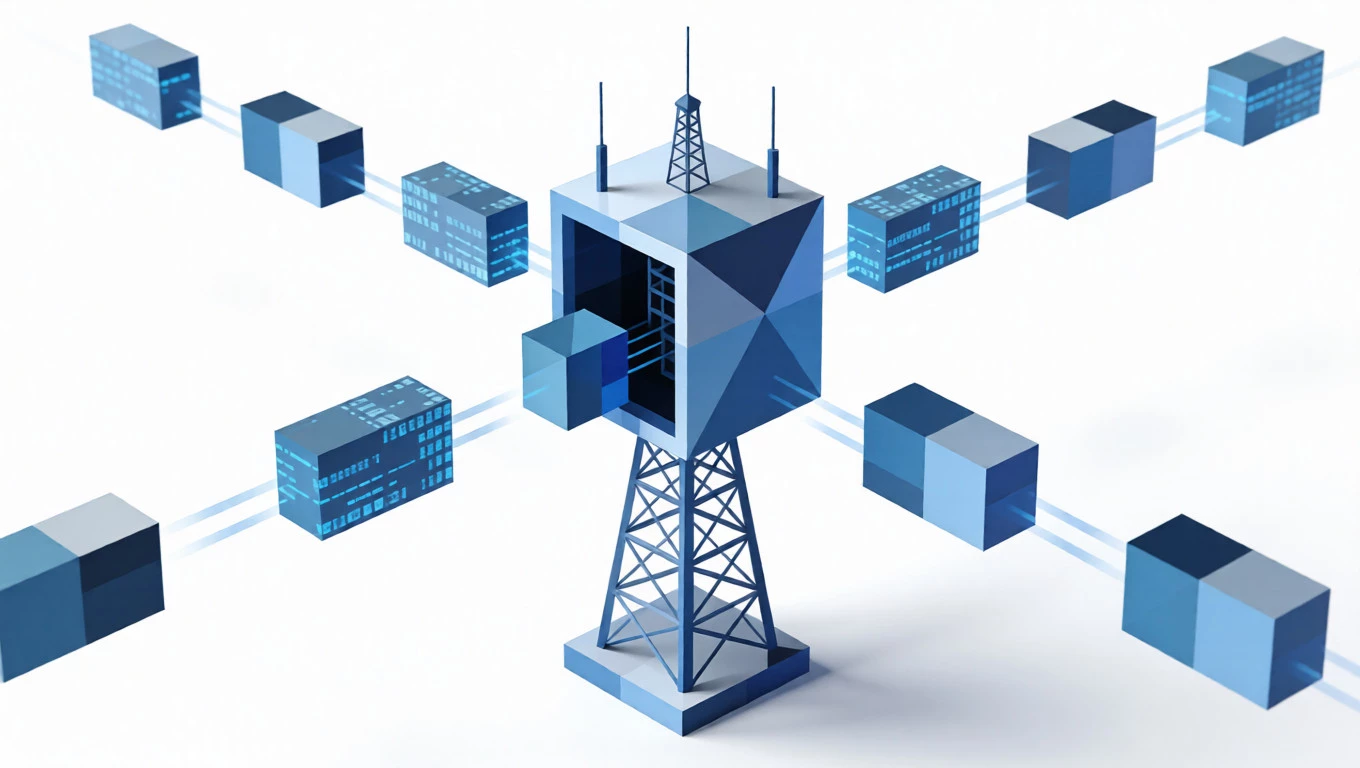
Unlike a standard proxy that gives you one IP address, a premium rotating proxy network acts as a gateway to a massive pool of millions of IP addresses.
- Request 1: You send a search query. The gateway assigns it to Residential IP A (a home in New York). Google sees a valid user.
- Request 2: You send the next query instantly. The gateway assigns it to Residential IP B (a home in London). Google sees a completely different user.
- The Result: You can send 10,000 requests per hour, but to Google, it looks like 10,000 different people asking one question each. The “velocity trap” is completely bypassed.
This architecture defeats the volume limit because no single IP ever exceeds the human threshold.
Phase 3: Optimizing Your Scraper to Avoid Detection
Even with rotating proxies, lazy coding can still get you caught. To fully eliminate the “We’re sorry” error, you must pair good IPs with smart software logic.
- User-Agent Rotation
Changing your IP is step one. Changing your “Browser Identity” is step two. Every HTTP request carries a “User-Agent” string telling the server what browser you are using. If you rotate your IP but keep using the exact same User-Agent for 10,000 requests, Google connects the dots.
- Strategy: Maintain a list of current User-Agents (Chrome, Firefox, Safari, Edge) and rotate them randomly alongside your IPs.
- Implementing Jitter (Random Delays)
Robots are precise; humans are messy. Do not set your scraper to wait exactly 2 seconds between requests. Use a random function to wait between 2 and 6 seconds. This “Jitter” makes your traffic pattern look organic rather than mathematical.
- Handling Cookies
For public data scraping (SERP), do not send cookies. If you send a cookie from a previous session, Google can track you even if you change your IP. Treat every request as a brand new, stateless visitor. This allows you to scale your data extraction efforts indefinitely without carrying the “baggage” of previous blocks.
Frequently Asked Questions (FAQ)
Q: Can I use free proxies to fix this?
A: Absolutely not. Free proxies are already heavily abused and flagged by Google. Using them will likely trigger more CAPTCHAs, not fewer. Google’s database of free proxy IPs is updated in near real-time.
Q: What is the difference between Datacenter and Residential Proxies for this error?
A: Datacenter proxies (like AWS) are cheap/fast but easily detected. Google knows the IP range belongs to a server farm. Residential proxies belong to real ISPs (Comcast, Verizon), making them much harder for Google to block without blocking real users.
Q: I’m not scraping, but I still see this error. Why?
A: You might have a browser extension installed that is querying Google in the background (e.g., an SEO toolbar showing keyword volume). Disable your extensions to see if the error stops.
Q: How many requests can I make before getting blocked?
A: There is no fixed number, as Google’s algorithm is dynamic. However, from a single IP, anything exceeding 30-40 searches in a short window can trigger a temporary CAPTCHA check.
Q: Is this error permanent?
A: Usually, it is temporary. If you stop the automated activity, the block on your IP typically lifts within a few hours. However, for business continuity, waiting is not a strategy—rotation is.
Conclusion: Scaling Without Barriers
The error “We’re sorry… but your computer or network may be sending automated queries” is simply a speed limit. If you are driving a single car (one IP), you must obey that limit.
But in the world of big data and SEO, you cannot afford to drive slowly. By utilizing a rotating residential proxy network, you essentially trade your single car for a fleet of thousands. This allows you to gather the intelligence you need at the speed your business demands, all while staying invisible to detection algorithms.
Don’t let rate limits bottle-neck your growth. Start your optimized journey here and deploy the infrastructure capable of handling millions of queries without a single interruption.