

In the high-stakes environment of Web3 whitelist grinding, NFT minting, or community management, a split-second delay determines success or failure. You execute your command, expecting a confirmation, but instead, you receive the dreaded HTTP 429 status code:
“You are being rate limited.”
Unlike a standard IP ban, this error is a calculated “timeout” imposed by Discord’s API gateway and Cloudflare’s protective layer. It signifies that your request volume has exceeded the strict quotas allocated to your IP address or authentication token.
For developers and power users, this isn’t just an annoyance; it’s a bottleneck that destroys ROI. Whether you are automating server interactions or managing automated data collection, overcoming this barrier requires more than just “slowing down.” It requires a fundamental upgrade in network latency and IP reputation.
The Engineering Behind the Block: Token Buckets and WAFs
To solve the rate limit, you must first understand how Discord counts. Discord uses a “leaky bucket” algorithm for its API limits.
- Per-Route Limits: You can only send X messages per channel per minute.
- Global Limits: You can only send Y total requests across the entire platform per second.
- Cloudflare WAF: Before your request even hits Discord, it passes through Cloudflare. If your IP address has a low trust score (common with datacenter IPs), Cloudflare introduces invisible challenges (captchas) that slow down your request execution time, triggering the rate limit on your end because your script “times out” waiting for a response.
When you see “You are being rate limited,” it often means your network infrastructure is too slow to handle the handshake verification, or your IP reputation is too low, causing Discord to throttle your bandwidth intentionally.
The Infrastructure Bottleneck: Why Standard Proxies Fail
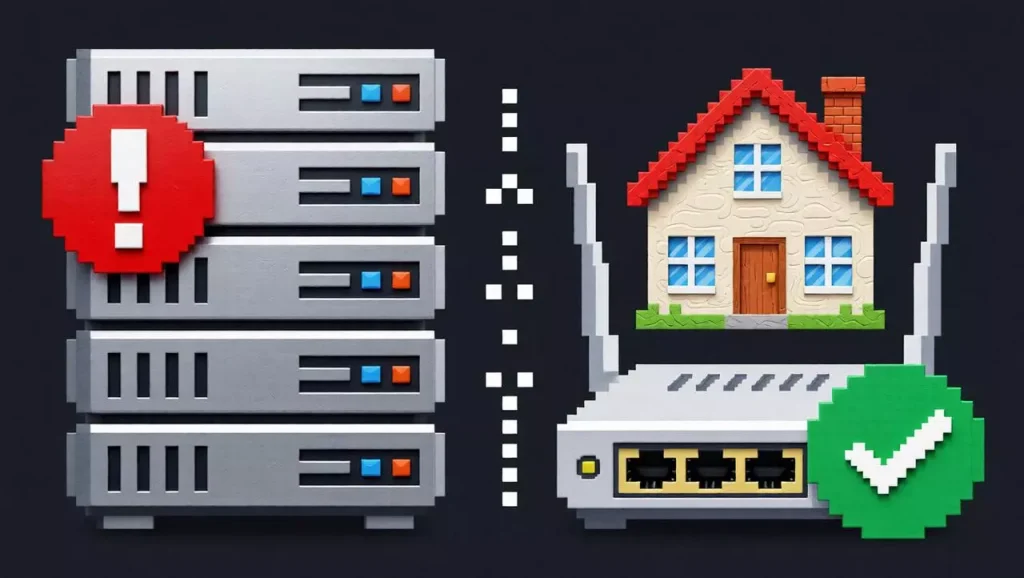
Many users attempt to bypass these limits using standard Datacenter Proxies. While cheap and fast in raw bandwidth, they are catastrophic for Discord automation.
- The “Flagged ASN” Problem Discord knows that no human user connects from an AWS or DigitalOcean server. Traffic from these Autonomous System Numbers (ASNs) is deprioritized. You might send a request at the same time as a residential user, but the residential user gets processed first. In a “First Come, First Served” (FCFS) scenario like an NFT drop, usage of datacenter IPs leads to immediate rate limiting.
- Latency Jitter Stability is paramount. If your proxy fails to resolve a request within 500ms, your automation tool might retry the request. Discord sees this “retry” as a second spam request, instantly banning the IP. Low-quality proxies with high jitter are the primary cause of accidental rate limits.
The Competitive Edge: Residential Intelligence
To operate at scale—whether sending DMs or sniping whitelists—you need network resources that mimic organic, high-trust traffic.
For High-Volume Automation (Mass DM / Scraping)
You need Rotating Residential Proxies. By routing every few requests through a different, verified residential IP, you distribute your load. Instead of one IP hitting the API 100 times, Discord sees 100 different IPs hitting the API once.
- Key Metric: Success Rate. A high-quality pool ensures that every IP is “alive” before the request is sent, preventing the retry loops that trigger bans.
For Persistent Connections (Grinding / Account Management)
You need Static Residential (ISP) Proxies. If you are manually engaging in servers to earn a whitelist spot, your IP cannot change. An ISP proxy gives you the speed of a data center line but the ASN of a home user (e.g., Verizon, AT&T). This “clean” identity allows you to push the boundaries of rate limits further than a flagged datacenter IP ever could.
By leveraging a premium residential proxy network, you reduce the “time-to-first-byte” (TTFB) and bypass Cloudflare’s initial security challenges, ensuring your requests are processed instantly.
Strategic Implementation for Developers (E-E-A-T)
Having the right IPs is half the battle; implementation is the other.
- Header Consistency: Ensure your HTTP headers (User-Agent, X-Super-Properties) perfectly match the “fingerprint” of the browser you are simulating. A mismatch here combined with a rate limit often leads to account termination.
- Smart Jitter: Do not use fixed delays (e.g.,
sleep(2000ms)). Discord detects patterns. Implement randomized jitter (e.g.,sleep(random(1500, 2500))) to humanize the traffic flow. - Handling 429s: Never brute-force a rate limit. If you receive a 429 code, read the
Retry-Afterheader and pause your execution for that exact duration. Ignoring this will result in a hard IP ban.
Frequently Asked Questions (FAQ)
Q: Is “Rate Limited” the same as being banned?
A: No. A rate limit is temporary (usually lasting from a few minutes to 24 hours). However, repeatedly hitting the rate limit wall can trigger a permanent platform ban on your account or IP.
Q: Why am I rate limited on a private Wi-Fi?
A: You may be on a “CGNAT” network where you share an IP with neighbors. If a neighbor is spamming Discord, you suffer the consequences. Switching to a dedicated residential IP resolves this.
Q: Does faster internet speed fix rate limits?
A: No. Bandwidth (Mbps) is irrelevant. Latency (Ping) and IP Trust are what matter. A 1Gbps datacenter connection will get limited faster than a 10Mbps clean residential connection.
Conclusion: Speed Through Stability
In the Discord ecosystem, “You are being rate limited” is a penalty for inefficient infrastructure. It is the system telling you that your request pattern looks suspicious or your connection is untrusted.
To secure whitelists and manage communities effectively, you must eliminate the friction between your client and Discord’s API. Upgrading to a low-latency, high-reputation residential proxy layer is the only way to ensure your interactions are prioritized.
Stop losing opportunities to API timeouts. Start your optimized journey here and deploy the high-speed infrastructure needed to stay ahead of the competition.