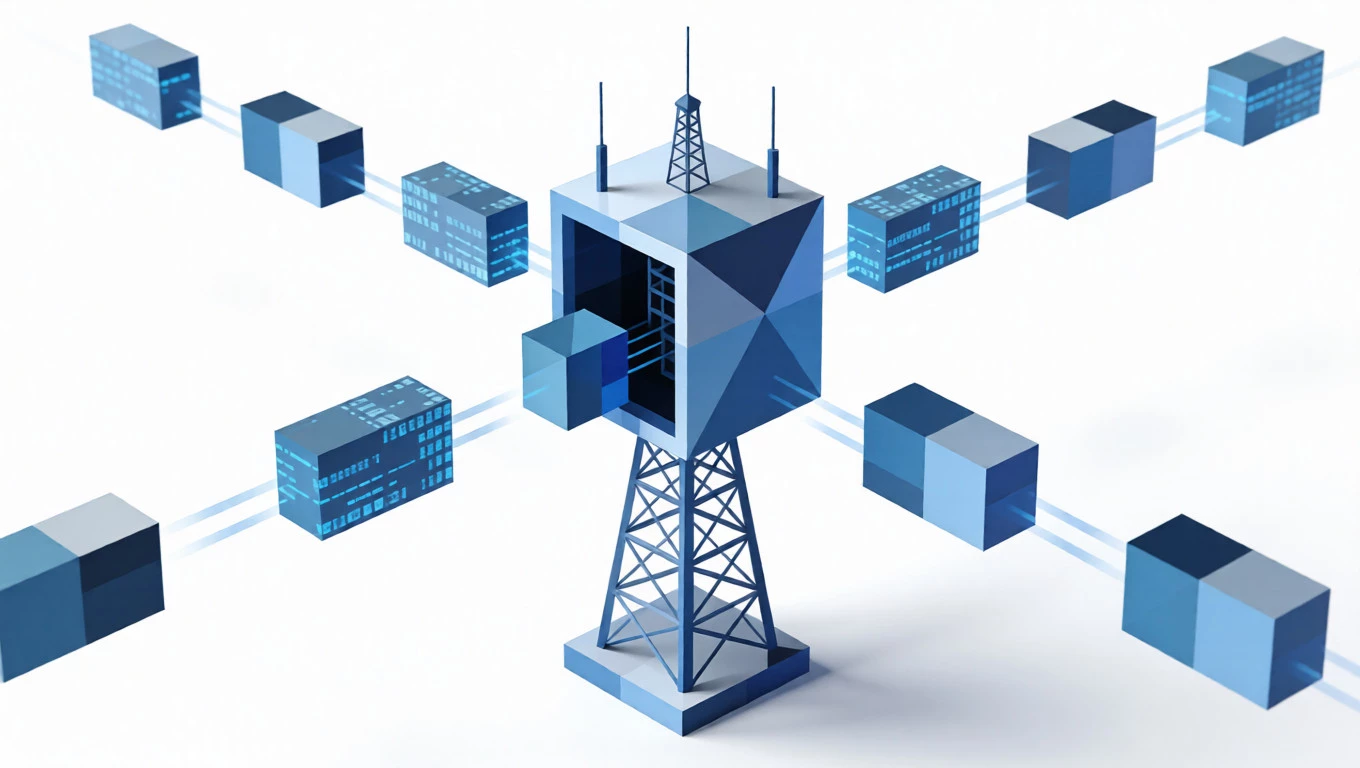


For developers managing automated data pipelines, few things disrupt operations like the Cloudflare 52x series errors.
Specifically, Error 522 (Connection Timed Out) and Error 524 (A Timeout Occurred) represent a breakdown in communication between Cloudflare’s edge nodes and your infrastructure. Unlike a 403 (Forbidden) where access is denied, 5xx errors indicate a failure to deliver data within an acceptable timeframe.
While casual users might blame the website’s server, in the context of high-volume data collection, these errors are frequently indicators of insufficient proxy performance or upstream throttling targeting low-quality network nodes.
This article analyzes the TCP/IP mechanics behind these timeouts and how network infrastructure quality dictates success rates.

Technical Distinction: Error 522 vs. Error 524
To resolve these timeouts, one must first distinguish where the connection chain is breaking.
Error 522: The Handshake Failure
This error occurs at the Network Layer. Cloudflare attempts to establish a TCP connection (SYN) to the origin server (or through your proxy) but does not receive an acknowledgement (SYN-ACK) within the designated window.
- The Cause: The request is being dropped before a connection is even established.
- In Automation: This often happens when a target site’s firewall silently drops packets from known Datacenter IPs. The server doesn’t reject the connection (which would be a “Connection Refused”); it simply ignores it, causing Cloudflare to wait until it times out.
Error 524: The “Tar-pit” Timeout
This error occurs at the Application Layer. The TCP connection is successfully established, but the server fails to send the HTTP response (Time-to-First-Byte) before Cloudflare’s default timeout (usually 100 seconds).
- The Cause: The server is “hanging” the connection.
- In Automation: This is a common anti-bot tactic known as “Tar-pitting.” Security systems identify a suspicious (but not overtly malicious) IP address and intentionally delay the response to exhaust the scraper’s resources. If your proxy is slow or flagged, the target site may deprioritize your request, pushing latency beyond the 524 threshold.
The Infrastructure Bottleneck: Why Cheap Proxies Time Out
In 90% of automated use cases, 522/524 errors are not caused by the target website being down. They are caused by the intermediary network layer—the proxy.
- High Latency & Jitter
Public or low-quality datacenter proxies often suffer from massive network congestion. If a proxy node takes 2 seconds just to resolve DNS and another 3 seconds to route the packet, it eats into the strict timeout budgets set by Cloudflare. High jitter means one request passes, but the next fails, creating instability.
- IP Reputation & Deprioritization
As mentioned regarding “Tar-pitting,” web servers prioritize traffic from high-trust sources. Traffic from residential ISPs (Verizon, Comcast, BT) is processed immediately. Traffic from known scraping subnets (AWS, DigitalOcean) is often queued or throttled. Using a low-reputation IP essentially puts your request at the back of the line. If the line moves too slowly, Cloudflare kills the connection -> Error 524.
Optimizing for “Time-to-First-Byte” (TTFB)
Resolving these errors requires a focus on reducing network overhead and increasing IP trust.
Migrating to ISP/Residential Infrastructure
To eliminate the “Handshake Failure” (522) and avoid the “Tar-pit” (524), the most effective strategy is utilizing ISP Static Residential Proxies.
- Bypassing The Drop: Because ISP proxies originate from legitimate internet service providers, firewalls rarely drop their TCP SYN packets. This resolves Error 522.
- Priority Processing: Requests from these IPs are treated as organic user traffic. They are processed with standard priority, ensuring the HTTP response is generated quickly, keeping TTFB well under the timeout limit and resolving Error 524.
By ensuring your high-quality proxy infrastructure provides low latency and clean ASN headers, you align your traffic profile with what Cloudflare expects from a legitimate visitor.
Frequently Asked Questions (FAQ)
Q: Can I fix Error 524 by increasing the timeout in my code?
A: No. Error 524 is generated by Cloudflare’s edge server, not your client. If Cloudflare decides the wait is too long (usually 100s), it cuts the connection. You cannot override Cloudflare’s internal settings; you must make your request complete faster.
Q: Why do I get Error 522 only on specific websites?
A: This indicates the target website has specific firewall rules blocking your current IP range. It is a targeted block, not a general internet connectivity issue. Changing to a clean Residential IP usually resolves this immediately.
Q: Is bandwidth (Mbps) the most important factor for fixing timeouts?
A: No. Latency (ms) is the critical metric. A 1Gbps connection with high latency (ping) will still trigger timeouts during the TCP handshake.
Conclusion: Latency is a Trust Signal
In the ecosystem of modern web security, speed and reputation are intertwined. A connection that times out is often a connection that was judged “low priority” by the target server.
For businesses relying on real-time data access, investing in low-latency, high-reputation network infrastructure is not a luxury—it is an operational necessity to keep data pipelines flowing.
Stop waiting for connections that never close. Start your optimized journey here and deploy the high-speed, reliable infrastructure needed to eliminate timeout errors.