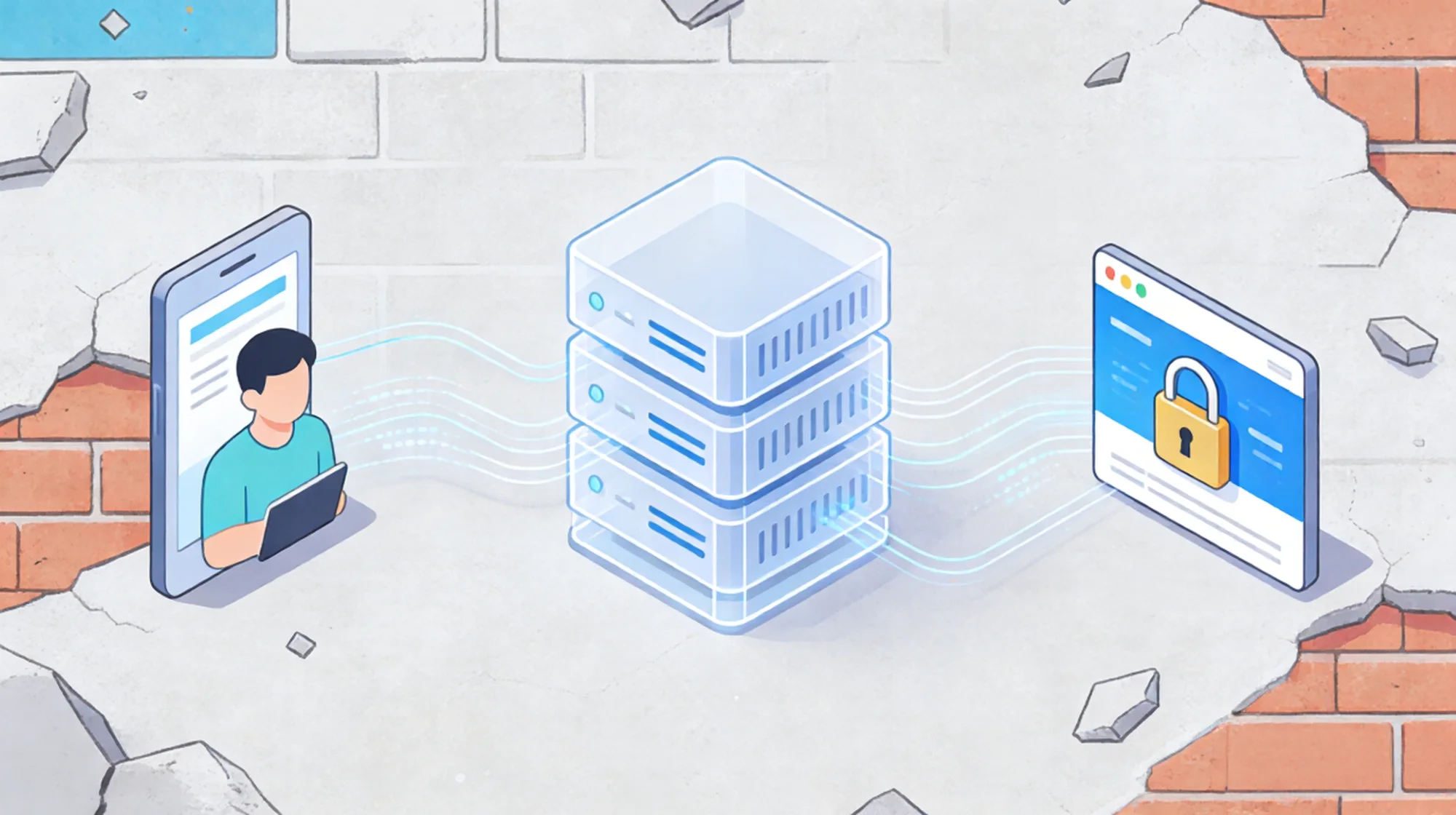


For digital marketers and e-commerce professionals, a red flag on browserscan is more than a technical error—it is a risk to your revenue. Whether you are managing multiple seller accounts or running ad verification, failing a fingerprint check often leads to immediate account suspensions.
If you are seeing warnings like “Proxy Detected” or “Inconsistent Location,” your network infrastructure is likely the bottleneck. This guide explains why standard connections fail and how to upgrade to clean residential IPs to ensure your digital profile passes every scan.

Part 1: Why Your Current Setup is Leaking
The most common reason for a browserscan failure isn’t your browser configuration—it’s your IP address.
The “Datacenter” Problem
Many users try to cut costs by using standard VPNs or generic proxies.
- The Issue: These services route traffic through cloud servers (AWS, Azure).
- The Detection: BrowserScan queries the IP’s ASN (Autonomous System Number). If it sees a hosting provider instead of a legitimate Internet Service Provider (ISP), it flags the connection as “High Risk.”
- The Fix: Professionals avoid this by switching to dedicated residential infrastructure. By using an IP that originates from a real home network, you eliminate the “Datacenter” flag instantly.
Inconsistent Geo-Data
Does your IP say “New York” but your browser leaks a “London” time zone?
- The Risk: Fraud detection systems look for these mismatches.
- The Solution: You need precise control. High-quality proxy networks allow you to target specific cities, ensuring your IP location perfectly aligns with your browser’s time zone settings.
Part 2: The Solution – IPHALO Residential Infrastructure
To pass strict checks like BrowserScan, you need network resources that mimic organic user behavior. This is where IPHALO delivers critical value to your workflow.
- True ISP Attribution
IPHALO provides access to a global pool of residential IPs sourced from legitimate ISPs (e.g., Comcast, AT&T, Vodafone).
- Benefit: When scanners analyze your connection, they see a valid consumer ISP. This “Human-like” footprint is the most effective way to improve your trust score.
- SOCKS5 for Complete Masking
Standard HTTP proxies often fail to handle WebRTC traffic, causing your real IP to leak.
- Benefit: By configuring a secure SOCKS5 connection, you ensure that all traffic protocols—including UDP and DNS requests—are routed through the proxy tunnel. This creates a leak-proof environment essential for sensitive multi-account operations.
Part 3: Business Scenarios & Protection
Why invest in premium infrastructure? Because the cost of a clean IP is a fraction of the cost of a banned business account.
E-commerce Multi-Accounting
Platforms like Amazon and eBay link accounts based on network footprints.
- Scenario: You manage 5 stores. If one store gets flagged due to a dirty datacenter IP, all 5 are at risk.
- Strategy: Assigning a unique, static residential IP to each store ensures complete isolation, protecting your total revenue stream.
Social Media & Ad Verification
- Scenario: You are warming up Facebook Ad accounts or managing 50+ TikTok profiles.
- Strategy: Social platforms aggressively ban “bot” traffic. Using rotating residential IPs ensures your interaction patterns look organic, preventing shadowbans and restriction triggers.
Part 4: Configuration Checklist for a 100% Score
To ensure your browserscan report turns green, follow this setup protocol:
- Select Residential: Never use Datacenter IPs for account management.
- Match Time Zones: Ensure your browser profile’s time zone matches the city of your IPHALO proxy node.
- Disable Local WebRTC: Or force it through the SOCKS5 proxy to prevent local IP leaks.
- Check DNS: Verify that your DNS resolver matches your proxy’s location (e.g., a US proxy should use a US DNS).
FAQ: Optimizing for Account Safety
Q: Can rotating residential IPs prevent multiple account bans?
A: Yes. By using rotating IPs for tasks like web scraping or account creation, you ensure each request comes from a different identity. This prevents platforms from linking your activities to a single footprint.
Q: What makes IPHALO proxies better than free or datacenter IPs?
A: Free proxies are often blacklisted and slow. Datacenter IPs are easily detected as “non-human.” IPHALO’s residential IPs offer the highest level of trust because they are indistinguishable from real home users, making them ideal for bypassing strict security filters.
Q: Why is SOCKS5 essential for BrowserScan?
A: BrowserScan checks for WebRTC leaks. Only the SOCKS5 protocol (supported by IPHALO) can correctly handle the UDP packets used by WebRTC, ensuring your real IP remains hidden during deep scans.
(Don’t let a bad IP ruin your accounts. Start your IPHALO trial today to secure your network identity.)