


In today’s digital business environment, whether you’re running a cross-border e-commerce operation, conducting market data analysis, or managing multiple social media accounts, the quality and type of your IP address has become a key variable for success.
However, many businesses immediately face a critical question when choosing a proxy IP: should they opt for a Data Center IP, a Residential Proxy IP, or a Mobile IP? This isn’t a simple “good vs. bad” choice; it’s a delicate balancing act between business needs, budget, and the trust level of your target websites.
A Prerequisite for Proxy IP Use: The Compliance Declaration
Before diving into the technical options, we must establish that compliance is the cornerstone of all business operations. Network proxy technology is a tool designed to improve enterprise efficiency and conduct lawful market research.
Compliance Usage Statement: The proxy IP services and solutions described in this article are strictly limited to lawful business operations, public data collection, and network testing, in full accordance with the relevant laws and regulations of the target country/region.
- It is strictly prohibited to use them for any purpose that attempts to bypass national cybersecurity supervision, access unauthorized foreign websites, or engage in illegal activities.
- When conducting data collection, one must respect the target website’s
robots.txtprotocol and be limited to publicly available information.
1.Data Center IP: The Priority for Efficiency and Cost
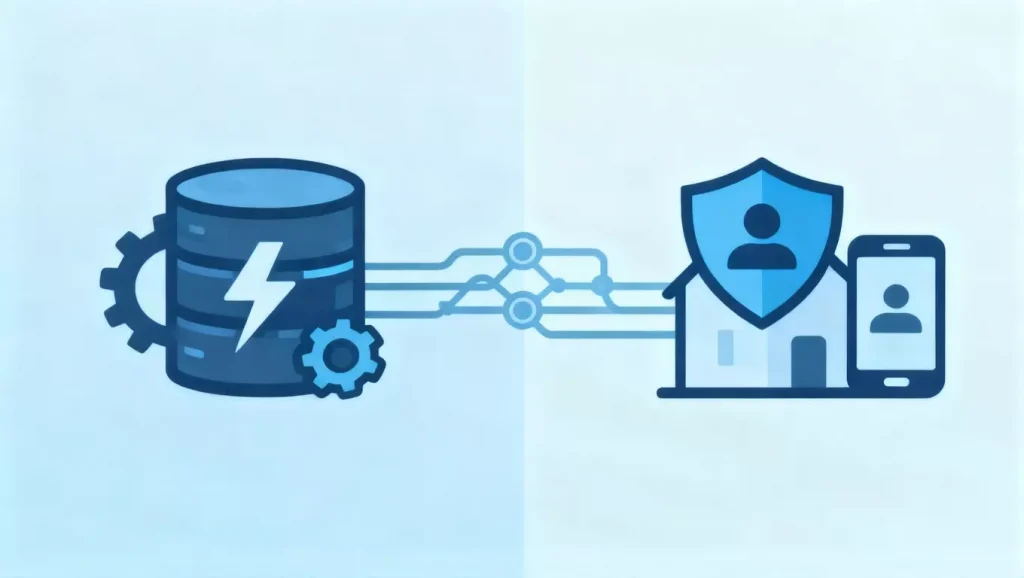
A Data Center IP is a server IP address originating from a large cloud service provider or data center.
- Core Trait: Its greatest advantages are extremely high speed, stability, and the most attractive cost-effectiveness.
- The Gatekeeper’s View (Analogy): This is like holding a “visitor pass” to enter a community. The gatekeeper (target website) can instantly identify you as a non-resident, as your source is a known commercial data center.
- Use Case: Ideal for large-scale, public information gathering tasks that don’t require high IP authenticity but demand high speed and cost-efficiency. If the target website’s risk control is relatively lax, this is a highly efficient choice.
2.Residential Proxy: The Cornerstone of High Authenticity
A Residential Proxy (or Residential IP) is an IP address assigned by an Internet Service Provider (ISP) to a real home broadband user.
- Core Trait: Its primary value is “authenticity.” From a website’s perspective, traffic from a residential proxy IP is almost indistinguishable from that of a real, local home user, granting it a high level of trust.
- The Gatekeeper’s View (Analogy): This is like a resident driving a “locally-plated private car.” The gatekeeper sees you as “one of their own,” significantly lowering access barriers.
Residential Proxies are mainly divided into two types to meet different needs:
- Dynamic Residential IP (Rotating IP): Suitable for scenarios requiring a large number of dispersed, short-term requests, such as market research or competitor price tracking. This is a common form of dynamic IP.
- Static Residential IP (Fixed IP): For managing social media accounts or e-commerce platforms that require long-term, stable logins, a Static Residential IP (also known as a static IP) is key to ensuring account stability. Professional service providers, like IPHALO, pay special attention to optimizing the IP Purity (or
clean ipstatus) and connection stability of such IPs to meet the stringent demands of fine-tuned operations.
3.Mobile IP: The Choice for the Highest Trust Level
A Mobile IP comes from a real 3G/4G/5G mobile network operator and is a genuine IP assigned to a mobile device.
- Core Trait: They represent the highest level of trust in the current environment.
- The Gatekeeper’s View (Analogy): This is like a local resident using their mobile phone. Due to the architecture of mobile networks (like CG-NAT), a single exit IP may carry hundreds or even thousands of real users.
- Why the High Trust? Consequently, a website’s risk control system is very cautious about restricting a Mobile IP, as it could “mistakenly block” a large number of real users. However, this does not mean an anomalous mobile IP won’t be restricted; risk systems will still flag IPs with suspicious behavior.
- Use Case: Suitable for tasks with the highest level of risk control and the most sensitive IP environments, such as ad verification and mobile app testing.
Frequently Asked Questions (FAQ)
Q: What is “IP Purity” (Clean IP)? How is it different from IP type?
A: This is a crucial distinction. “IP Type” (Residential/Data Center/Mobile) determines its “origin” and “inherent trust level.”
IP Purity (or IP Reputation, i.e., a clean IP) determines its “historical record.” A high-purity IP means it has not been used for sending spam, does not appear on major blacklists, and its historical behavior pattern is normal.
A high-quality IP is always a combination of high “IP Purity” and the “appropriate type.”
How to Choose the Right IP Solution for Your Business
Instead of using subjective star ratings, we recommend solutions based on clear business scenarios:
- Scenario 1: Long-term, stable management of cross-border e-commerce or social media accounts.
- Recommendation:Static Residential IP.
- Reason: A fixed, trustworthy home network identity minimizes the risk of account flagging caused by frequent IP environment changes.
- Scenario 2: Large-scale, high-speed public data collection (where the target site has lax defenses).
- Recommendation:Data Center IP.
- Reason: It offers the best cost-effectiveness and the highest speed, making it the top choice for efficiency.
- Scenario 3: Accessing high-defense websites, conducting market research, or competitor analysis.
- Recommendation:Dynamic Residential IP.
- Reason: A large pool of rotating real home IPs ensures a high success rate and is difficult to block in bulk.
- Scenario 4: Performing operations on platforms with the strictest risk control (e.g., app testing, ad verification).
- Recommendation:Mobile IP.
- Reason: It has the highest trust baseline and best simulates a real mobile user environment.
Conclusion: IP Selection is Part of Your Business Strategy
In the world of proxy IPs, there is no single “best” option, only the “most suitable” strategy.
Understanding the efficiency of Data Center IPs, the authenticity of Residential Proxies, and the trust of Mobile IPs is the first step in formulating your business plan. Choosing a provider like IPHALO, which offers compliant, stable, and diverse IP resource combinations, will help you gain an edge in this “game” of authenticity vs. cost.
Disclaimer: Please be sure to use proxy IP services in compliance with all national and local laws and regulations, and to jointly maintain a healthy network ecosystem.